
Concepts, maths and risk
Casino Game Categories Commonly Associated with FUN88
This neutral guide covers slots, live casino, table games, card games and crash-style labels. It does not confirm current availability, reproduce supplier screens or explain how to win.





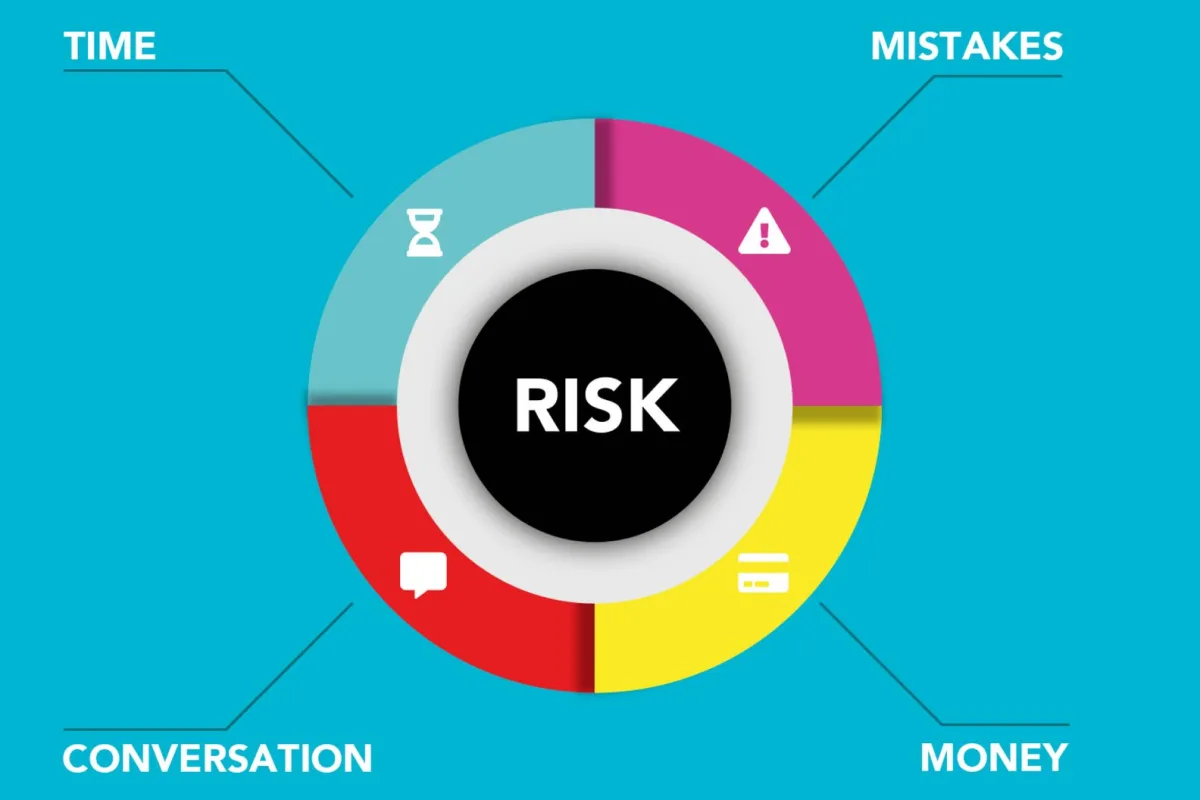
How common casino categories differ
This section explains terminology only. It does not provide access, recommendations or instructions for wagering.
Slots
Digital games commonly use reels or symbol grids and a defined paytable. Visual themes do not change the need to understand loss risk and theoretical maths.
Live casino
A streamed presentation may involve a human dealer and remote interface. Video creates a social setting but does not remove the underlying financial risk.
Table games
This broad label can include formats based on cards, dice or wheels with defined rules and payouts.
Card games
Rules can involve fixed dealer procedures, player decisions or comparisons between hands. Familiarity does not guarantee a favourable result.
Crash-style games
A displayed multiplier may end at an uncertain point. Earlier visual sequences do not establish the next outcome.
RNG, house edge and RTP
| Concept | What it describes | What it does not mean |
|---|---|---|
| RNG | A mechanism for generating outcomes within software or hardware | Proof that implementation, testing or governance is reliable |
| RTP | A theoretical return percentage over a very large number of events under stated conditions | A forecast for one person, one session or a short sequence |
| House edge | The long-run mathematical advantage built into rules or payouts | A guarantee of steady short-term results |
| Volatility | How widely outcomes can vary around a theoretical pattern | A route to selecting a profitable moment |
| Independent testing | Assessment by a competent body against a defined standard | Something established by a badge without a verifiable record |
Why individual sessions do not follow the average
Long-run percentages describe aggregates under defined assumptions. A short session can differ sharply, and a past loss does not force a compensating result. This is why “due”, “hot” and “cold” narratives are poor evidence. Increasing the amount after a loss increases exposure; it does not correct the earlier result.
Different rule variants can change the mathematical model even when the visual title looks similar. A public screenshot or category label cannot establish the rules currently applied by a service. This guide deliberately avoids copyrighted provider screens, current game lists and claims that a particular implementation is certified.
Live presentation and behavioural risks
Fast rounds, sounds, near-miss effects, autoplay and continuous prompts can make time and cumulative spending less noticeable. A live presenter can add social pressure or create a false impression that outcomes are personally influenced. The responsible response is to set limits outside the interface, use a separate timer and stop when attention or emotion is narrowing.
Crash-style visuals can encourage pattern-seeking even when previous outcomes do not predict the next one. No sequence shown on a screen is a basis for guaranteed returns. This site provides no strategy, recommendation or link to a game.
Risk boundaries for readers
- Do not use rent, food, education, medical or borrowed money.
- Do not chase losses or treat a theoretical return as a promise.
- Take a break when time feels compressed or decisions become automatic.
- Keep devices and payment credentials away from minors.
- Do not install a game file or profile from an unknown source.
- Check current Indian law; 21+ informational-audience wording is informational and does not make online money gaming lawful.
Testing claims need a verifiable scope
A generic “certified” badge does not identify which game build was tested, the standard used, the testing body, the date or whether the result remains valid. Reliable technical evidence should connect a specific implementation with a competent laboratory or authority record. This site has not performed that verification for a FUN88 game catalogue and therefore publishes no certification conclusion. Visual similarity between two games also does not prove they use identical rules or code.
RTP is a population statistic
A theoretical return is normally modelled over a very large number of events and under defined rules. Individual results can be far above or below it, especially over short periods. Volatility affects how widely results may vary, not whether a particular session is safe. Increasing the amount after a poor sequence raises the amount exposed; it does not force results to move towards an average on the player’s timetable.
Design can affect decision quality
Continuous rounds, celebratory sounds, near-miss presentations and easy replay controls can blur the difference between gross returns and net loss. A live host or social feed can add urgency without changing the mathematics. Use an external clock, review actual account movement rather than animations, and stop when a planned boundary is reached. These are harm-reduction observations, not ways to improve outcomes.
Final check: random-looking animation, a streamed presenter or a cryptographic label should not be confused with independent proof of fairness. Verification would require evidence tied to the exact implementation. Even a correctly implemented random process can produce sustained losses, and its long-run model offers no protection for money needed now.
No short session, visual history or category label can establish a safe or profitable next outcome.
Frequently asked questions
No. It explains broad public category terms and does not confirm that FUN88 currently offers any specific game, studio or supplier.
A random number generator is a technical mechanism intended to produce outcomes under a defined system. Its existence does not guarantee fairness without reliable testing and governance evidence.
Return to player is a theoretical long-run percentage under stated conditions. It does not predict an individual session or prevent loss.
It is the mathematical advantage represented by a game’s rules over the long run. Short-term results can vary widely.
No reliable prediction is provided here. Visual patterns or previous multipliers do not establish what a later outcome will be.
No. It contains no play instructions, provider ranking, system, tip or method to improve winnings.
Why visual similarity is not proof of a current game list
A copied thumbnail, familiar table layout or supplier-style label can appear on an impersonation page. Confirming a category concept is different from confirming present availability, a publisher relationship or a lawful service. This guide therefore avoids vendor screenshots and treats every specific availability statement as time-sensitive and unverified unless supported by a current primary source.